Essential Travel Packing Checklist: What to Pack for Your Next Trip
A little planning around trip length, weather, and activities makes your travel packing checklist simpler and cuts unused items. Your destination and luggage choice also shape what belongs in your bag. A capsule wardrobe is a small group of versatile clothes that can be combined into multiple outfits.
This practical checklist gives you a starting point, not a strict set of rules. Adjust it for your plans, from a weekend away to a longer stay, and leave room for the things you will actually use. Think about what you can replace easily and what you need close at hand during travel.
Key Takeaways
- Build your list from your itinerary, forecast, and bag limits.
- Choose mix-and-match clothes that suit your planned activities.
- Keep important documents and medication easy to reach.
- Pack shoes you have already worn comfortably.
- Check destination rules before carrying medication abroad.
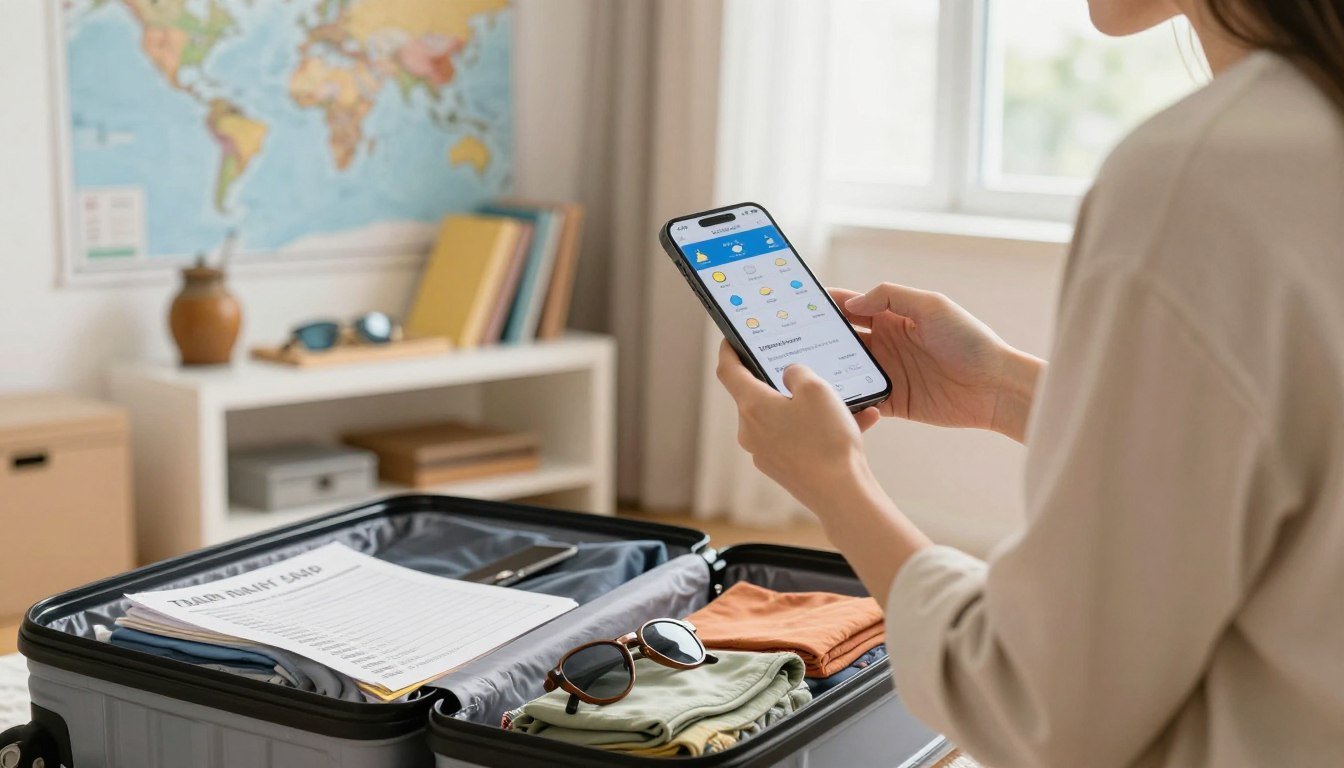
- Mark items off a saved or printed list as you pack.
Start with the items you cannot replace easily, then tailor the rest to your itinerary.
How to Build a Travel Packing Checklist That Fits Your Trip
The best travel packing checklist starts with your itinerary, the local forecast, and the luggage you plan to bring. Those choices help you decide what earns its place in your bag. A weekend city stay and a week of outdoor activities call for different items.
Customize a list for your trip instead of copying one unchanged. Check destination requirements and any airline or tour rules before you choose specific things. Some trips have bag-size or weight limits, so check your trip details.
Customize your list for your itinerary, forecast, and luggage limits. A copied list may include things you will never use.
Decide whether you will check luggage or travel with a carry-on. Your bag choice affects how much space you have and which items stay with you. A personal item can hold the things you want under the seat.
Start from your itinerary, then note likely weather, planned activities, and any special needs. Check entry rules when traveling abroad, and make sure your bag fits the limits for each part of the trip.
The free printable packing list comes in two versions. One has quantity lines and blank lines; the other is blank and grouped into six categories.
- Clothes
- Shoes
- Accessories
- Toiletries
- Entertainment
- Miscellaneous
Use the blank version to build your own list, or begin with the filled-in version and change its quantities. Either gives you a clear structure without deciding what you need for you.
A complete travel packing checklist can be useful, but the best travel packing checklist is the one shaped around your plans. Before adding an item, ask whether it serves an activity, a likely weather condition, or a practical need.
How Much Clothing Should You Pack?
For a 3-to-5-day trip, plan on one pair of underwear and socks per day, then use mix-and-match outfits to keep the rest manageable. A capsule wardrobe lets you combine a few pieces in several ways. Adjust the mix for your activities and laundry access.
For a week or longer, pack for the days between laundry loads, not automatically for every day. The table gives a starting point for clothing, clothes, and shoes on a 2026 trip.
| Trip length | Underwear and socks | Outfit mix | Shoes |
|---|---|---|---|
| 3 to 5 days | 1 pair per day | 1-2 dressier, 1-2 activewear, 1-2 casual outfits | 1-2 pairs |
| Over a week | 1 pair per day | 3 dressier, 2 activewear, 3-4 casual outfits | 2 pairs |
For a Three-to-Five-Day Trip
Bring one pair of underwear and socks for each day, plus one pair of pajamas. Plan one to two dressier outfits, one to two activewear or athleisure outfits, and one to two casual outfits.
One to two pairs of shoes can cover those plans. Choose pieces that work together, such as tops that match both casual bottoms and a dressier option. That leaves room for a change in plans without packing a full extra wardrobe.
For a Week or Longer
For a trip over a week, pack one pair of underwear and socks per day and two pairs of pajamas. Bring three dressier outfits, three to four casual outfits, two activewear or athleisure outfits, and two pairs of shoes.
Laundry can lower those clothing totals. A travel laundry kit can help you wash small items during your stay, so you can pack for the days between washes instead of the full trip.
A Flexible Packing List for Women
A 2026 packing list for women can start with two pairs of shorts or capris, two pairs of pants, and four to six shirts. Add four pairs of socks, five pairs of underwear, and one extra bra.
Include one rainproof jacket and one swimsuit. One to two light cardigans and one to two skirts can suit some plans, but swap pieces to match weather and activities.
If your hotel or accommodation offers laundry, pack for the days between washes rather than for every day of the trip.
Which Shoes and Accessories Belong in Your Bag?
Two well-broken-in pairs are usually more useful than several shoes that each serve only one occasion. Choose footwear for walking, weather, and any dressier plans. Comfort comes first when a trip includes long days on your feet.
For many trips, two versatile pairs cover most needs. A 2026 women’s packing list uses two pairs of walking shoes, with one closed-toe pair and one open-toe pair if weather permits.
Comfortable walking shoes should already feel good and have traction. A second pair could be sandals in warm weather, or waterproof shoes in wet or cold conditions. Choose a dressier pair only if your itinerary calls for it.
New shoes can cause sore feet before you have a chance to break them in. Wear new pairs at home first, and skip them if they still rub or feel stiff.
Pick accessories that do more than fill space. Sunglasses and a hat can help on sunny days, while a scarf or sarong can serve several uses. Bring a belt if your outfits need one, and consider a collapsible tote or day bag for outings.
Wear your bulkiest pair while traveling if doing so leaves more room in your luggage.
What Toiletries and First-Aid Items Should You Pack?
A compact toiletry kit covers daily hygiene first, then adds only the health and skin-protection items your destination calls for. Pack the daily basics and leave out products that are easy to buy there.
Keep your kit small by choosing travel-size containers and useful basics. A practical toiletry kit may include these grouped items:
- Dental care: toothbrush, toothpaste, and floss.
- Hair and body care: deodorant, shampoo, conditioner, body wash, and a brush or comb.
- Skincare: the products you use each day.
- Sun and bug protection: sunscreen and insect repellent.
- Hand care: hand sanitizer for times when soap and water are not close.
- Basic first aid: bandages, first-aid ointment, and a pain reliever.
Those first-aid items can handle minor scrapes and common discomfort. Add only what suits your trip, since a large kit can take up room without helping much.
Bring glasses or contact-lens supplies if you use them. Personal hygiene products also belong on your list when you need them. Think through your usual routine rather than packing every product you own.
For a short trip, small containers can hold enough of your regular shampoo or skin care. Products you can easily buy at your destination do not need to take up valuable bag space.
The 2026 travel checklist includes sunscreen, insect repellent, hand sanitizer, bandages, and first-aid ointment. Keep the few products you need during the journey easy to reach instead of burying them in checked luggage.
How Should You Pack Medication and Plan for Travel Health?
For international travel, check that every medicine you carry is permitted in both your destination and any country where you will have a layover. Rules can differ across borders, even when a medicine is common at home.
Keep medicine in its original labeled container, carry it in your carry-on, and bring enough for the trip plus delays. Store copies of written prescriptions with the medicine, including each drug’s generic name.
Medicine Rules and Safe Packing
Check with the destination’s embassy and the embassies of layover countries to confirm that your medicines are allowed. Some countries allow only a 30-day supply of certain medicines and may ask for a prescription or medical certificate.
Pack enough medicine for the full trip, plus extra for delays. Keep it in your carry-on in case checked luggage gets lost or arrives late.
Carry copies of written prescriptions and include generic medicine names. A 2026 women’s packing list also advises keeping prescription drugs in containers labeled with your name and your doctor’s name.
Health Preparation Before an International Trip
Ask your health care provider for a note if you carry controlled substances or injectable medicines, such as insulin or EpiPens. Keep the note with your medicine and prescription details.
Schedule a travel-health appointment at least 4-6 weeks before departure. That gives you time to ask about health needs and any steps that could affect your plans.
For 2026 international travel, travelers should be fully vaccinated against measles before going to any international destination. Check your vaccination status as part of trip preparation.
Arrange a travel-health appointment 4-6 weeks before departure so there is time to resolve medication or vaccination questions.
Which Travel Documents and Money Should You Keep Close?
Keep the documents you may need at an airport, border, or hotel somewhere you can reach without opening checked luggage. Keep originals secure, but make key details available if a wallet or bag goes missing.
An international travel packing checklist should include both entry documents and trip logistics. A passport alone may not cover every stop or reservation.
Identification, Entry Documents, and Reservations
Carry a passport or other accepted ID, plus a visa when required. Keep travel tickets, your itinerary, reservation details, and hotel address close enough to find during check-in or arrival.
For international trips, bring a copy of official immunization records. An emergency contact list and insurance contact information can also help if plans change or you need support.
| Document category | Examples to carry | Useful backup |
|---|---|---|
| Identity | Passport, driver’s license, or ID | Copy of passport or ID |
| Entry permission | Visa when required | Copy of visa details |
| Trip reservations | Tickets, itinerary, hotel address | Saved reservation details |
| Money or insurance | Credit and debit cards, insurance details | Card copies and insurer contacts |
Payment Cards and Backup Copies
Bring the credit and debit cards you plan to use, along with some cash. Keep emergency contacts and insurance details in a place you can reach if your phone or wallet is unavailable.
The 2026 travel checklist includes copies of a passport and credit card. Store copies separately from the originals, and keep them protected from casual access.
Store copies separately from the originals so one lost wallet or bag does not take both.
Which Electronics and Chargers Are Worth Bringing?
Start with the phone and its charger, then add electronics only if they serve a planned activity or need. A smartphone can replace several single-use devices, including a camera, alarm, flashlight, and navigation tool.
Pack each device with the cable or charger it needs. A forgotten charging cable can make a useful device dead weight in your bag.
- Phone and charger
- Charging cable and power bank
- Headphones
- Camera and charger, if you plan to use one
- Plug adapter for international travel
A phone can handle several everyday tasks, so you may not need separate gear for each one. Bring a camera only if its features matter for your plans.
International outlets may need a plug adapter. An adapter changes the plug shape; a voltage converter handles voltage when a device cannot use the local supply.
Check each device’s voltage needs before you travel. Some devices work across different voltages, while others need a converter to avoid damage.
Test that each device charges with the cables and adapters you are bringing.
What Belongs in Your Carry-On and Personal Item?
Keep anything you need during the flight, including essential medication and a change of clothes, in your carry-on or personal item. The personal item stays under your seat, while the larger carry-on goes in the overhead bin.
For U.S. air travel in 2026, each carry-on liquid container must hold 3.4 ounces (100 milliliters) or less. Place those containers in one quart-sized bag for screening.
Keep These Essentials Within Reach
Use the carry-on for items you may need in flight or if checked baggage is delayed. Keep the personal item light enough to carry comfortably and small enough for the space under your seat.
- Travel documents and phone
- Essential medication and in-flight medication
- A change of clothes
- Food or snacks
- An empty water bottle to fill after security
On a long flight or a time-sensitive arrival, a spare outfit can make a baggage delay easier to manage. Keep medicine you may need during travel close, not buried in checked luggage.
Follow the TSA Liquids Rule
Liquids, aerosols, gels, creams, and pastes in a carry-on must each fit a container of 3.4 ounces (100 milliliters) or less. Place them in a quart-sized bag.
Containers larger than that limit should go in checked baggage. Medications and infant and child nourishments are exceptions to the TSA liquids rule, though screening may still apply.
| Item situation | Carry-on rule | Checked-bag choice |
|---|---|---|
| Liquids at or under 3.4 ounces (100 milliliters) | Carry in a quart-sized bag | May go in checked baggage |
| Containers above that limit | Do not pack as standard carry-on liquids | Place larger containers in checked baggage |
| Medication or infant and child nourishments | Exceptions to the liquids rule | May also go in checked baggage |
Check each liquid container by size before you put it in the quart-sized bag.
What Changes for Different Destinations and Seasons?
A beach vacation, a hiking itinerary, and a winter trip call for different gear even when they last the same number of days. Match gear to plans, not every activity you might imagine doing.
Layers and a rainproof outer layer help when conditions change. Check the forecast and any activity or trip-specific luggage requirements before packing.
- Hiking or camping: sturdy hiking boots, quick-drying clothes, a day pack, snacks, and activity-specific equipment.
- Cruise: seasickness remedies, formalwear, dress shoes, and a swimsuit.
- Beach: water shoes, towels, sunscreen, and snorkel gear.
- Cold weather: goggles, a neck gaiter, and snow boots.
An active trip may need gear that supports long days outdoors, while a cruise can include both casual time and formal events. A beach plan has its own needs, from swimwear to water shoes.
Weather can shift during a trip, so layers give you options without a separate outfit for every forecast. A rainproof outer layer can help when showers arrive during a walk or outdoor activity.
Check your activity list before packing special gear. Some equipment may have its own size or weight rules, especially when it travels with you on a flight or cruise.
Match special gear to activities you have actually planned, rather than packing for every possibility.
How Can You Organize Your Bag and Finish Packing?
Packing cubes can make it easier to find clothes without unpacking the whole bag, especially when your itinerary includes multiple stops. Separate by category or destination to keep items in order.
Do not compress your bag so tightly that essentials become hard to find. Cubes and compression sacks can save space and help you keep clean clothes apart from worn ones.
Use packing cubes to group items, but leave enough room to reach what you need without unpacking everything.
Use Packing Cubes for Separate Categories
Use separate cubes for clothing types or for each stop on a multi-destination trip. Packing cubes do not create more bag space, but they can keep clothes from shifting and make it easier to find one group.
Eagle Creek’s Pack-It Reveal Cube Set uses 300-denier recycled polyester and has a clamshell design that opens on three sides. In a May 2025 report, testers said they used the previous-generation Eagle Creek cubes monthly for seven years without zipper or mesh failures.
The Pack-It Isolate medium cube weighs 1.3 ounces, compared with 3.7 ounces for the Pack-It Reveal medium cube. Its set uses 70-denier ripstop nylon; the prior version used 50-denier fabric.
The Thule Compression Packing Cube Set costs $47.75. Outside Online tested 23 packing cubes and named it its overall top pick, while The Guardian tested 26 cubes on 14 trips and highlighted it as a top compression option.
The Thule set has 1,400 Amazon reviews and a 4.7-star rating. Those details describe past testing and customer feedback, not a promise that one cube will suit every bag or trip.
Make a Final Check at Home
Use this short check before you close the suitcase:
- Confirm your itinerary and essential documents.
- Charge devices and pack their cables.
- Check the forecast for your destination.
- Separate clean clothes from worn clothes.
- Lock doors or arrange mail collection before leaving.
Leave enough room to reach items you may need during transit. Before you leave, do one last check for documents, medication, charged devices, and home security.
Conclusion
The most useful packing plan is the one built around your actual itinerary, not every item you might possibly need. Keep important items within reach, and adjust the rest for your destination and daily plans.
A saved list helps you pack with less second-guessing. It also makes it easier to spot missing essentials before you leave home.
Save or print your list and check off each essential as it goes into your bag.