
How to Build Healthy Eating Habits for Everyday Life

A nourishing routine can start with one manageable choice at the next meal. Healthy eating habits do not require a perfect diet or a full pantry makeover. For adults, small changes can support health while fitting real life.
Work schedules, budgets, tastes, and health needs differ. A useful change might mean adding a piece of fruit at breakfast, packing a simple lunch, or keeping a few quick meal options on hand.
Food choices can also shift as your needs and routines change. You can build a flexible pattern without giving up favorite foods or cooking every meal from scratch. Progress comes from choices you can repeat, not from getting every meal right.
Pick one change that feels realistic enough to repeat this week.
Healthy Eating Habits Start With a Balanced Plate
A simple visual guide is to cover half a plate with vegetables and fruit, then divide the rest between whole grains and protein. The Harvard Healthy Eating Plate uses half for produce, one-quarter for whole grains, and one-quarter for protein. This pattern can help you choose foods that offer vitamins, minerals, and other nutrients.
Human nutrition is how the body obtains and uses nutrients from food and beverages. The Dietary Guidelines for Americans have appeared every five years since 1980. Their advice can change over time, while familiar foods can still make a nourishing meal.

Make vegetables and fruit the starting point
Fresh vegetables and fruit add color, texture, vitamins, and minerals. Try spinach in eggs, chopped vegetables in pasta, or fruit beside a sandwich. A mix of colors and types adds variety without requiring a new recipe.
Frozen and canned vegetables can work well when fresh choices are costly or hard to use in time. Add them to soup, rice, or a quick skillet meal. Fruit can also fit into oatmeal, yogurt, or a packed lunch.
Add whole grains and a range of protein foods
Whole grains such as oats, brown rice, and whole-wheat bread add useful variety. Protein foods include beans, fish, eggs, poultry, nuts, and seeds. Choose options that suit your tastes, culture, and kitchen routine.
Use the plate as a flexible starting point, not a rule that every meal or person must follow exactly.
To use the visual guide, build a meal in three simple steps:
- Fill half the plate with vegetables and fruit.
- Choose a whole grain for one-quarter of the plate.
- Add a protein food for the remaining quarter.
A plate that follows this pattern can still reflect familiar cuisines and personal preferences.
What Should Go on Your Plate Each Day?
For a 2,000-calorie pattern, the daily targets include 3 vegetable servings, 2 fruit servings, 2-4 whole-grain servings, and 3 dairy servings. These goals adjust to individual calorie needs where specified, so they are guides rather than identical rules for every adult.
The protein goal is 1.2-1.6 grams per kilogram of body weight per day. Needs may also be adjusted to calorie requirements. Ask a qualified health professional about personal needs tied to a health condition.
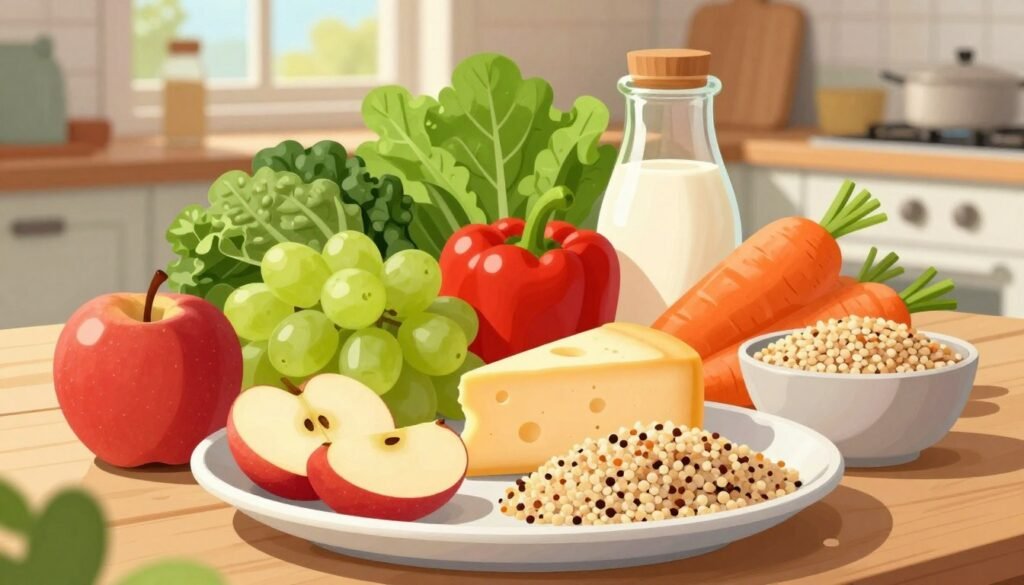
Use daily targets as a flexible guide
The table shows daily goals for a 2,000-calorie dietary pattern and examples you can use. Goals are adjusted to individual calorie needs where specified, including vegetables, fruit, whole grains, and dairy.
| Food group | Daily goal for a 2,000-calorie dietary pattern | Practical examples |
|---|---|---|
| Vegetables | 3 servings | Carrots, greens, tomatoes |
| Fruits | 2 servings | Apples, berries, oranges |
| Whole grains | 2-4 servings | Oats, brown rice, whole-wheat bread |
| Dairy | 3 servings | Milk, yogurt, cheese |
| Protein | 1.2-1.6 grams per kilogram of body weight per day | Eggs, beans, fish, tofu |
Choose convenient forms and varied proteins
Protein can come from eggs, poultry, seafood, red meat, beans, peas, lentils, legumes, nuts, seeds, and soy. Aim for a variety of foods from both animal and plant sources. Harvard’s plate guidance also recommends limiting red meat and avoiding processed meats such as bacon and sausage.
Whole vegetables and fruit in their original form are a sound default. Frozen, dried, or canned foods can make meals easier, too. Choose frozen canned options with no or very limited added sugars when available.
Use the targets as a starting point and adjust them to individual calorie needs rather than treating them as identical for every adult.
How to Read Nutrition Labels Without Guessing
Start by checking the serving size, since every nutrient amount on the label applies to that stated amount. The serving size shows how much people typically eat or drink, not a recommended amount. A package may contain more than one serving.
Check how many servings you actually consume before comparing calories, salt, or sugars. If you eat two servings, you take in twice the listed amount of each nutrient.
Total sugars include natural sugars in foods such as milk and fruit, as well as added sugars. Added sugars include those put in during processing, plus sugars from honey, syrups, and concentrated fruit or vegetable juices.
The FDA sets the Daily Value for added sugars at 50 grams per day on a 2,000-calorie diet. Five percent Daily Value or less per serving is low; 20% or more is high. These figures help you compare products, but your needs may differ.
Food labels help you judge the content and amount in packaged products. Compare similar products using the same serving basis so the added-sugar numbers are meaningful.
How to Eat Healthy Food Every Day When You’re Busy
A workable week of meals can use a few prepared ingredients in several different combinations. You can eat healthy food every day without finding a new recipe for every meal. Familiar building blocks also help make busy weekdays feel less rushed.
A 7-day healthy eating plan can reuse ingredients and leave room for schedule changes. Rotate a few breakfasts, such as oatmeal, eggs, or yogurt with fruit. At lunch, alternate leftovers with simple assembled meals, such as a bean wrap or a tuna sandwich.
Build a flexible seven-day meal framework
For dinner, vary vegetables, whole grains, and protein foods across the week. You might make fish one night, beans another, and poultry later. Keep meals familiar, then change a sauce, vegetable, or grain for variety.
Meal components such as cooked grains, ready-to-use protein foods, and washed produce can be prepared ahead. Combine them in different ways rather than setting a strict menu for all seven days. This approach works for healthy eating habits for busy professionals.
Keep quick weekday options within reach
Simple combinations count, even when you do not cook from scratch. Suitable frozen or canned ingredients can save time and help you avoid an expensive last-minute meal. A quick meal does not need to have fewer calories to be a useful choice.
Use these five prep tips to make the week easier:
- Wash or cut produce for snacks and meals.
- Cook a grain to use in bowls or sides.
- Prepare or portion beans or another protein.
- Set aside portable fruit for work or errands.
- Plan one quick backup meal for a busy night.
Keep one low-effort backup meal available for the day when the schedule changes unexpectedly.
Where Can You Find Trustworthy Nutrition Information?
A trustworthy starting point is a resource that identifies its public-health or clinical purpose and gives guidance suited to the reader’s situation. Government websites and university extensions can help you find useful nutrition information. Ten useful nutrition websites and resources appear below as starting points, not a ranked list.
USDA Food Plans offer four cost levels: Thrifty, Low-Cost, Moderate-Cost, and Liberal. They describe weekly quantities of foods and beverages in purchasable forms for different age-sex groups, with costs based on average food prices.
Compare USDA Food Plans for budget planning
USDA last updated the Thrifty Food Plan cost levels and market baskets in 2021. Federal law requires its next reevaluation to be no earlier than October 1, 2027. These plans can inform a budget, but they are not personalized shopping lists.
| Website or resource | Useful for | Website or resource | Useful for |
|---|---|---|---|
| DietaryGuidelines.gov | Federal dietary guidance | USDA Food and Nutrition Service | Food and nutrition resources |
| FDA | Nutrition Facts label information | National Institute on Aging | Nutrition for older adults |
| MedlinePlus | Patient and family health information | National Agricultural Library Food and Nutrition Information Center | Dietary Reference Intakes and Recommended Dietary Allowances |
| Oregon State University Extension | Ingredients database | PennState Extension | Mediterranean eating on a budget |
| Purdue University Extension | Nutrition basics | University of Minnesota Extension | Portion-size guidance |
Match trusted guidance to age and access needs
MedlinePlus is an online health information resource for patients, families, and friends. The National Library of Medicine, part of the National Institutes of Health, provides it. Its official website is a useful place to start with general health questions.
Older adults can choose nutrient-dense foods across vegetables, fruits, grains, protein foods, dairy products, and oils. Budget, low appetite, and chewing or swallowing difficulty may shape food choices and meal planning. For personal medical needs or persistent difficulty eating, take questions to a qualified health professional.
How Can You Cut Added Sugar and Saturated Fat?
Swapping a sugar-sweetened drink for water is a direct way to reduce added sugars in an everyday routine. The 2025-2030 Dietary Guidelines say one meal should contain no more than 10 grams of added sugars. Saturated fat should generally stay at or below 10% of total daily calories.
Small drink and cooking changes can make this guidance easier to use. Try these swaps:
- Choose water instead of soda, fruit drinks, or energy drinks.
- Limit 100% fruit or vegetable juice, or dilute it with water.
- Choose unsweetened drinks, including still or sparkling water.
- Use unsaturated vegetable oil or olive oil instead of solid fats when suitable.
Water and unsweetened drinks can support hydration without added sugars. Limiting juice is a practical choice, even when the label says 100% juice. These steps do not promise to prevent heart disease, type 2 diabetes, or other serious health problems.
Changes in fats and drinks are about daily choices, not a cure for disease. Check that a replacement drink is unsweetened, since a fruit-flavored label does not guarantee that it is.
How Do You Make Healthy Choices Stick at Home?
Children can learn everyday food habits more easily when adults make meals predictable and keep the tone relaxed. Supportive routines work better than pressure or food battles. Shared family meals can happen at home or include takeout.
Healthy eating habits for kids grow through repeated, low-pressure experiences. Let children notice hunger and fullness, and make room for unfamiliar foods without demanding a taste. Adults can model a positive approach by enjoying a range of foods without labeling them as good or bad.
These five habits can help make home meals more supportive:
- Set a predictable meal and snack routine.
- Keep mealtimes calm and let children respond to hunger and fullness.
- Avoid using food as a reward or asking children to clean their plates.
- Invite children to plan meals and take age-appropriate kitchen tasks.
- Let adults model a positive approach to food and welcome new foods without battles.
A second set of habits can help families fit shared meals into real schedules:
- Choose a shared meal when schedules allow.
- Serve a variety of nourishing foods and snacks.
- Let children help choose one meal for the week.
- Offer a familiar food alongside something new.
- Make takeout part of family time when cooking does not fit.
Keep food from becoming a test: children do not need to finish every item to take part in a meal.
A sustainable food pattern and regular physical activity can support maintaining a healthy weight. Activity also benefits health beyond weight, so choose movement that fits your life. Choose one household routine to practice this week, such as inviting a child to help plan a meal.
Conclusion
A useful routine is one that fits real schedules and can be repeated without aiming for perfection. Healthy eating habits grow through steady choices that suit your tastes, budget, and health needs. One meal does not define your overall pattern.
Choose a meal this week and add a vegetable or fruit, a whole-grain food, or a protein option that fits your preferences. Start with something you already enjoy, such as adding berries to breakfast or beans to a favorite soup. A small change can be easier to repeat than a complete menu overhaul.
Choose that first meal now and decide what small change to try.