
Simple Daily Exercise Tips for Beginners

A clear patch of floor and a few minutes are enough to begin building a more active routine. Limited time, uncertainty about form, and no gym equipment can make starting feel harder than it is. You can begin at home with daily exercise for beginners that fits your space and current comfort.
Moderate-intensity activity raises your breathing while still allowing you to talk, but not sing. “Daily” can mean regular movement across a week, not a hard workout every day. Some days may include a planned session; others may simply include walking or gentle movement.
This guide helps you choose manageable activity, set a realistic plan, and build a routine you can keep. You do not need special gear or a perfect starting level. The useful first step is one you can repeat, even on a busy day. Choose a starting point that feels repeatable, not impressive.
What Can a Short Daily Workout Do for Your Health?
A short walk or movement break is a meaningful start, even if it is not yet a full workout. Ten minutes can help you build a habit and add physical activity to your day. Brief exercise can support health, though it may not meet a full weekly activity target.
Regular activity supports fitness and health in several ways. The CDC identifies physical activity as beneficial for health, including heart health. A walk around your block or a few minutes of movement at home can be a practical first step.
Use brief activity to build a habit, not as a promise of a specific health result.
A 2022 analysis estimated that 10 minutes of moderate exercise daily could prevent more than 111,000 premature deaths each year among U.S. adults. That estimate describes a population, not a promise about what will happen to one person. Your health is shaped by many factors.
Short sessions can add useful activity, even when they do not reach a complete weekly goal. A few minutes can also make movement feel less daunting, which may help you return tomorrow. Over time, you can add activity as it fits your schedule and comfort.
The first session does not need to feel impressive. A gentle walk, a movement break between tasks, or an easy home workout can all count as a start. Treat the first few minutes as a habit you can build, not a test of fitness.

How to Build a Daily Exercise for Beginners Routine at Home
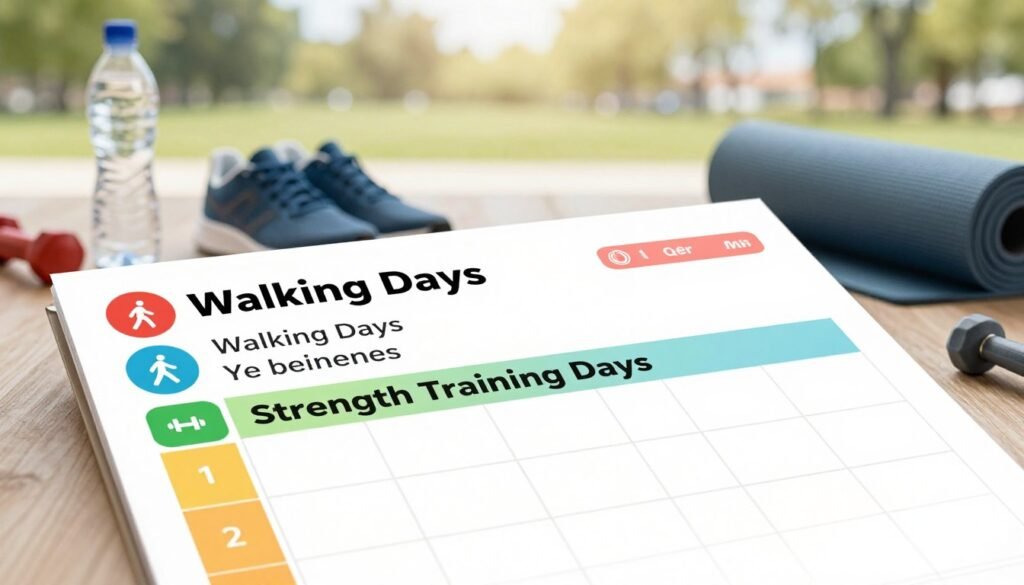
A workable first week can alternate two strength sessions with walking and recovery days. A home exercise routine can use bodyweight, comfortable walking, and rest. Two strength days, three light-movement days, and two rest days make one practical example.
This plan is flexible, not a required prescription. Adjust the days to match work, family needs, energy, and available space. A walk can happen indoors or outdoors, and ordinary daily movement can fill a lighter day.
Set a weekly rhythm
The weekday plan below offers a clear start. It places strength sessions apart and leaves room for walking and gentle movement. Each workout can be brief while you learn what fits.
| Day | Focus | Example | Beginner cue |
|---|---|---|---|
| Monday | Strength | Bodyweight practice | Choose controlled moves |
| Tuesday | Walk | Easy neighborhood walk | Keep a talking pace |
| Wednesday | Rest or gentle mobility | Easy joint movement | Stay relaxed |
| Thursday | Strength | Bodyweight practice | Use familiar moves |
| Friday | Walk | Comfortable walking | Choose a steady pace |
Saturday and Sunday can be rest, gentle walking, or ordinary daily movement. If a weekday becomes busy, you can shift a session rather than treating the calendar as a pass-or-fail test. Make the plan serve your week.
Balance strength days with lighter movement
Strength training challenges muscles against resistance. A planned strength session asks your muscles to work; an easy walk and daily mobility offer lighter movement. Those lighter days can keep you active without turning every day into a hard workout.
Keep strength work separate from casual movement in your mind. A few relaxed steps around the house do not need to become a formal session. Likewise, an easy walk should feel different from a demanding workout.
Use the 3-3-3 rule as an optional template
The commonly used 3-3-3 rule means three workouts a week, three exercises per session, and three sets per exercise. People use the label for different templates, so it is not a required standard. You can borrow the basic structure without following every number.
For a new exerciser, the rule may be more than needed at first. Start with a few movements and a pace you can manage. Your routine should fit your current fitness, not an online label.
Writing down the plan can make it easier to follow. Add a note about where you will move and what time tends to work. Put the planned sessions on a calendar at times you can realistically protect.
How Should You Warm Up and Cool Down?
Start a session with easy movement that gradually raises your breathing rather than jumping straight into strenuous work. A warm-up should last at least five minutes. Begin with simple motion, then move into a comfortable range of motion.
A session can include a warm-up, a conditioning phase, and a cool-down. The warm-up helps your muscles move before harder work begins. Keep the effort low at first, then raise it little by little.
Prepare with easy movement
March in place, circle your arms, and try gentle hip or trunk rotations. These simple moves work in a small room and need no equipment. Keep the movements smooth and within a comfortable range.
Next, try dynamic stretching, which moves muscle groups through their range of motion. For example, you might lift your knees gently or sweep your arms through easy arcs. Do not force a larger motion just to make the warm-up feel more intense.
A gradual start gives you time to notice how your body feels that day. If a movement feels awkward, use a smaller range and slower pace. You are preparing for the workout, not trying to make the warm-up a separate challenge.
Return to a comfortable pace
At the end, slow your pace until your breathing feels closer to normal. Then use comfortable static stretches, which involve holding a position rather than moving through it. A stretch may be held for up to 30 seconds.
Stretch only to a mild pull that feels comfortable. Stretching can help you settle after exercise, but it does not guarantee injury prevention. Keep the cool-down calm and unhurried.
Some days call for a longer, easier warm-up before your usual movement. Give yourself that time rather than rushing into the harder part. If a movement feels sharp or painful, stop instead of stretching through it.
Which Beginner Exercises Cover the Whole Body?
A beginner’s exercise menu works best when it includes walking, a push, a squat-like movement, and simple balance or core work. These bodyweight exercises need little space and no gym. Choose movements that feel steady and manageable, not all seven as a hard daily workout.
Try these seven options as a menu. A beginner bodyweight circuit can take about 15-20 minutes, with 30 seconds to one minute of rest between exercises. You can rotate options rather than doing every move in one session.
- Walking or marching in place: adds easy movement and raises your activity level; keep your steps relaxed.
- Chair sit-to-stands: practice a squat-like movement; use a stable chair and stand with control.
- Wall push-ups: challenge your chest and arms; place your hands on a steady wall.
- Glute bridges: work the muscles around your hips; lift only as far as feels comfortable.
- Bird dogs: practice balance and core control; reach slowly from hands and knees.
- Standing side steps: add side-to-side movement; take small steps and stay upright.
- Calf raises: work the lower legs; hold a stable surface if you need support.
These choices are options to rotate, not a requirement to perform every move as a hard workout each day. Daily movement can be light, while strength-focused work needs recovery. A gentle walk and a strength session do not need the same effort.
The movement choices do not need to differ for girls or women starting out. Pick an option that matches your comfort and space. You can also keep a stable chair or wall nearby for support while learning.
There is no need to turn a short circuit into a contest. Slow, controlled movement helps you learn the pattern and notice what feels right. Pick a few movements you can do with steady control before adding more to a session.
How Can You Modify Exercises With No Equipment?
The right beginner version is the one you can control without holding your breath or losing alignment. You can begin strength movements without weights or resistance bands. Body weight is enough while you learn the movement.
Use the easier variation first, then move to the next option when it feels comfortable. The form check matters more than choosing the hardest version. A harder move that makes your form break down is not useful progress.
Make each movement easier first
| Exercise | Easier variation | Next variation | Form check |
|---|---|---|---|
| Squat | Chair sit-to-stand | Free-standing squat | Knees follow toes |
| Push-up | Wall push-up | Counter push-up | Keep body aligned |
| Plank | Knees-down plank | Full plank | Keep back steady |
| Jumping jack | Side-step jack | Jumping jack | Land softly |
A plank can begin with your knees on the floor. You can replace jumping jacks with side steps while keeping the arms moving. These changes lower the demand without requiring special equipment.
Add household resistance only when ready
A filled water bottle can provide light household resistance once bodyweight movements feel comfortable. Hold it securely and keep the movement slow. You do not need to buy gear to begin building strength.
Try the basic motion without added resistance before picking up an object. If the bottle makes you rush, twist, or lose alignment, set it aside. A small load is still optional, not a test of effort.
When you learn a new move, choose ease over intensity. That gives you room to focus on breathing and smooth motion. Keep the easier version until you can repeat it comfortably and consistently.
How Can You Progress at a Comfortable Pace?
Progress can be as small as one controlled repetition added to a familiar movement. You do not need to change your whole training plan at once. Change one part of the challenge at a time and keep your form steady.
For example, you might move from 10 repetitions to 11. A Cleveland Clinic beginner training tip suggests finishing a set with about two good repetitions still possible. That “two reps left” idea helps you avoid taking every set to exhaustion; it does not guarantee against injury.
Choose one of these small changes when your current version feels manageable:
- Add one repetition to a movement.
- Extend a hold slightly.
- Reduce a rest interval modestly.
- Move to a harder variation.
Make only one change at a time, then give yourself a chance to see how it feels. Adding repetitions and shortening rest at once can make it harder to tell what raised the effort. Small steps make your progress easier to track.
A goal can be simple, such as adding one repetition or holding a position a little longer. Your fitness does not need to improve at the same pace each week. Some sessions may feel easier than others.
If a new level feels too demanding, return to the version you can control. You have not failed by scaling back; you are choosing the right challenge for that day. If you cannot keep the same form, return to the previous level rather than forcing the harder one.
How Often Should Beginners Train Their Muscles?
A strength session does not need a long list of exercises to give your muscles a useful challenge. Across the week, strength training should cover the major muscle groups. Older adults are advised to strengthen major muscle groups at least two days per week.
The National Institute on Aging also advises older adults not to train the same muscle group on two days in a row. That guidance names a specific age group, so it should not be treated as a rule written only for all beginners. Start with a comfortable amount of work.
A set is a group of repetitions completed before a break. A repetition is one complete performance of a movement, such as one sit-to-stand. One set of 8-12 repetitions of each strength exercise can be effective, while two or three sets may be more effective.
Beginners can start with one comfortable set before considering more. A Cleveland Clinic beginner resistance sample uses three sets of 10-12 repetitions, but that is one example, not a starting requirement. Choose a level that lets you maintain control.
- Use controlled form from the first repetition to the last.
- Breathe continuously instead of holding your breath.
- Rest between sets as needed.
- Stop when your form begins to deteriorate.
More sets can add work, but they also take more time and effort. You do not need to copy a sample routine if its volume feels like too much. A comfortable starting set gives you a chance to learn the movement.
Pay attention to how each exercise feels, not just the count. A clean, steady repetition is more useful than one rushed to reach a number. Leave enough recovery before repeating hard work for the same muscle group.
How Much Cardio Should Beginners Aim For?
For most adults, the weekly goal is 150 minutes of moderate aerobic activity or 75 minutes of vigorous activity. The two targets are alternatives, not amounts to add together. Walking is a useful way to build endurance at a manageable pace.
Moderate-intensity activity raises your breathing while you can still talk, but not sing. Vigorous activity takes more effort. Choose an activity level that suits your current comfort, rather than treating the higher target as automatically better.
| Activity level | Example | Weekly target | Beginner approach |
|---|---|---|---|
| Moderate activity | Brisk walking | 150 minutes | Build gradually |
| Vigorous activity | Running | 75 minutes | Choose only if already comfortable with vigorous effort |
The U.S. adult guidance uses these weekly amounts for physical activity. For older adults, the National Institute on Aging recommends gradually building toward at least 150 minutes of moderate-intensity aerobic activity each week. The goal is to work toward the amount, not rush to it.
Shorter walks can be divided across the week. A walk during a break and another later can both add to your total. If brisk walking feels too demanding at first, use an easier pace and increase the effort when it feels comfortable.
Use the talk test to check your effort. At a moderate pace, you can talk but not sing. If you can only say a few words before taking a breath, ease the pace.
Cardio can be walking, running, or another aerobic activity you can repeat. Your heart rate may rise as you move faster, but the talk test offers a simple guide without a device. Start at a pace and duration you can repeat, then add time gradually.
How Can You Recover Without Losing Momentum?
A recovery day can include easy movement, but it should not become another demanding workout. Active recovery means easy movement on a rest or lighter day. Persistent soreness is a signal to allow more recovery.
A comfortable walk or gentle mobility may suit an ordinary rest day. Keep the effort low enough that it feels restorative rather than like another training session. If your muscles stay sore all the time, they may not be getting enough recovery.
Soreness after a workout can happen, but constant soreness is a reason to adjust. Give yourself more time before repeating demanding work. A lighter day should leave room for your body to settle.
Pain or an injury calls for a complete rest day, not active recovery. Skip exercise when movement makes an injury worse or causes pain. Rest means taking a break from planned activity, not finding a different workout to push through.
Worsening or persistent pain warrants advice from a health professional. Pay attention to changes rather than trying to work around pain with extra effort. Taking time off can be the practical choice when your body needs it.
Keep recovery distinct from training: an easy walk can fit a lighter day, while an injury needs full rest. There is no need to prove commitment by moving through pain. Take the full rest day when pain or injury is the reason you are stopping.
Does Exercise Timing or Eating First Matter?
A routine you can repeat matters more than choosing a supposedly perfect hour. The best time is the one that fits your schedule and supports consistency. No clock time is off-limits for everyone.
Heat outdoors can affect when a walk feels comfortable. Your response to late exercise can also matter if it affects sleep. Choose a time and setting that make the activity easier to return to.
Choose a time you can keep
Some people prefer a morning workout before the day fills up; others have more room later. Neither choice is best for everyone. A steady time can help your routine, but a changing schedule may call for flexible sessions.
If outdoor heat makes walking unpleasant, choose a cooler time or move indoors. If an evening workout keeps you awake, try an earlier session. Use your own comfort and sleep as practical guides.
Decide whether to eat before exercise
Eating before a light beginner session is a comfort choice. You do not have to work out fasted to make movement count. Notice whether a small meal or snack feels better for your body.
A 2025 randomized crossover study of 18 healthy male college students found higher fat expenditure during morning exercise before breakfast than in after-breakfast and before- and after-dinner conditions. The researchers said further research was needed to clarify its long-term relevance.
That short-term finding does not prove a long-term weight advantage for fasted exercise. The study involved a small group of male college students, so it does not establish a rule for everyone. Stop if you feel faint or unwell during exercise.
Some beginners feel fine before a light session, while others prefer to eat first. Neither choice needs to become a strict rule. Use your energy, comfort, sleep, and schedule to decide whether morning or later sessions work better.
How Can You Fit Exercise Into a Busy Day?
A busy day can still include a short walk or a small home session. A 10-minute workout for beginners at home can give you a clear option when time is tight. Use short movement when that is what fits, then build duration over time.
Here is one sample 10-minute session, not a required formula. Spend five minutes marching easily and moving your joints. Then use three minutes to alternate a chair squat, wall push-up, and bird dog at a comfortable pace.
Finish with two minutes of easy walking and relaxed movement. Keep the effort steady, and do not rush through the strength moves to fit more repetitions. You can use a smaller range if a movement feels awkward.
- Take the stairs when they are a comfortable choice.
- Walk during a phone call when your setting allows it.
- Use a walking break instead of sitting through the whole break.
Small choices can fit into parts of the day that are already open. A few minutes of walking between tasks may feel easier to manage than waiting for a long block of free time. Pick the option that works with your surroundings.
A short home workout can be a complete choice for a busy day, not a failed version of a longer session. If you have more time later, you can add movement, but the brief session still counts. Keep a backup 10-minute option for days when the full plan will not fit.
How Can You Adapt a Routine to Your Goals and Comfort?
A useful beginner routine can be adjusted to personal goals without requiring a gender-specific set of movements. Bodyweight exercise can build strength and aerobic fitness without gym equipment. Pick changes that match your comfort and the health goals that matter to you.
Strength work can also improve balance and reduce the risk of falls and fractures. You can keep the same basic plan while changing the pace, movement choice, or amount of effort. No single version fits every body or life situation.
Keep the basics inclusive for women
The same beginner principles of gradual effort, good form, and recovery apply to women. There is no need for a separate universal workout based on gender. Adapt movements to your comfort and any relevant health needs.
Bodyweight exercises can work at home or in a gym, with no special equipment required. You can choose a steady walk, a strength session, or both across your week. Your starting point does not need to match anyone else’s.
Pair movement with realistic weight goals
Exercise can contribute to energy use and support health, but weight change also depends on food intake and other factors. A workout cannot promise a specific change on the scale. Avoid expecting one movement to reduce weight in only one area of your body.
Weight is only one way to track change. You might also notice that a walk feels easier or that a planned session is becoming more familiar. These signs can help you see progress without turning every workout into a weigh-in.
A good goal should describe an action you can repeat, not a result you cannot fully control.
Pick a goal that fits your life and feels clear enough to track. You might note whether you completed planned activity or how comfortable a regular walk feels. Choose a goal you can track through repeatable actions, such as completing planned sessions or walking more comfortably.
Conclusion
The best first routine is one you can return to next week. A few manageable sessions can begin a fitness plan, and gradual progress can help consistency grow. You do not need to solve every detail before you start.
Choose two days for strength work and set aside a short walk on another day. Keep your first sessions simple enough to fit real life. Write down your first two planned sessions today and begin with the easiest versions of the movements.