How to Declutter Your Home: A Step-by-Step Guide

A crowded counter or overfilled drawer can make an ordinary day feel harder before you have even started. Belongings can hold memories, family stories, and parts of your life you do not want to lose. The goal is a useful, comfortable home, not a bare or picture-perfect one.
When you learn how to declutter your home, small choices can ease the strain on your time and mind. You can start with one area, decide what stays or leaves, and build simple routines that fit your household. There is no need to change everything in a day. A clear place to cook or a drawer that opens easily can make daily tasks feel lighter.
Choose progress that makes daily life easier, not an ideal of having the fewest belongings.
How to Declutter Your Home Without Getting Overwhelmed
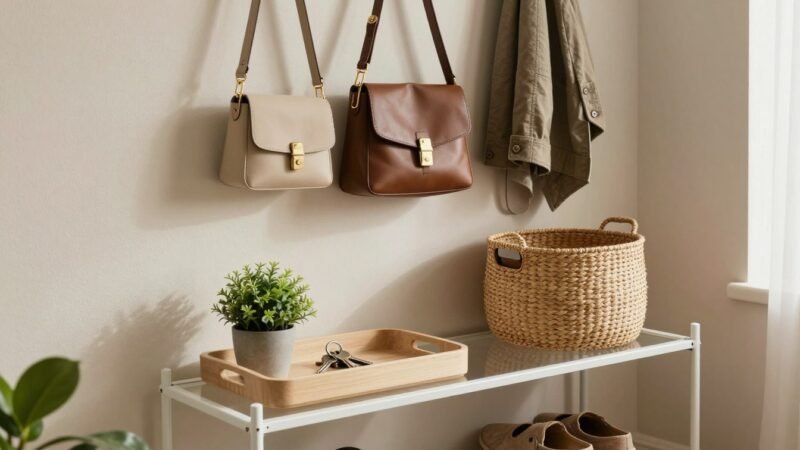
The quickest way to make a large project feel manageable is to choose one small area and decide exactly when you will work on it. Pick a high-impact spot your household uses often, such as the kitchen counter or the entryway. Set a small goal and book a specific time to work.
Start with one small area, or even one item, when the whole home feels like too much.
Pick a starting point and a realistic goal
Decluttering feels easier when your first task has a clear limit. Choose one drawer, one shelf, or a small part of a room, then decide what you want to finish. A specific, realistic goal gives your plan a useful shape.
Keep the goal tied to how you use the space. You might clear enough of a kitchen counter to prepare dinner, or make room for shoes by the door. A five-minute burst is a good fallback when a longer block of time will not fit.
Build a schedule for a week or a month
To declutter your home in a week, focus on one small zone each day. To declutter your home in 30 days, repeat short sessions across several areas. Schedule 20-30 minutes daily if that fits your life, but treat the schedule as a guide, not a promise that every room will be done.
A sample four-week plan covers the entryway and kitchen in week one, bedrooms and closets in week two, bathrooms and laundry in week three, then the garage and storage in week four. One checklist author set a personal goal of removing at least 50 items each week before moving. That was one person’s target, not a required quota.
The 30-day minimalist game gives you another way to pace the work: remove one item on day one, two on day two, and keep adding one daily until day 30. The one-minute rule can also help with tiny tasks: do a household job right away if it takes less than 60 seconds. Before stopping, write down the next small task so it is easy to restart.
Which Decluttering Method Should You Choose?
Sorting similar belongings together makes it easier to notice duplicates, while working one room at a time can deliver a faster improvement to a specific space. The category method groups items by type, even when they sit in different rooms. The Four Box Method sorts belongings into keep, donate, sell, and discard or recycle destinations.
Sort by category or by room
Choose the category method to compare the same kinds of things across your home. Room sorting works well when one space needs to function better right away. A small-area approach keeps the task contained when you have little time or energy.
| Method | Focus | Useful situation | First action |
|---|---|---|---|
| Category method | One type of item across rooms | Spotting duplicates | Gather all books together |
| Room method | One whole room | Making a busy space work now | Clear one room surface |
| Small-area method | One drawer or shelf | Short work sessions | Empty one drawer |
The KonMari method sorts by category, including clothes, books, papers, miscellaneous belongings, and sentimental mementos. The Life-Changing Magic of Tidying Up by Marie Kondo is a book on category-based tidying. Swedish Death Cleaning focuses on letting go before belongings become a burden to loved ones.
Use a simple decision rule
Books on how to declutter your home often describe different methods, but no rule needs to make the choice for you. The 20/20 rule is a tie-breaker for rarely used just-in-case items: consider whether you could replace one for less than $20 in less than 20 minutes from where you are. It is not an automatic reason to discard something.
The 80/20 idea, also called the Pareto Principle, suggests that people use 20% of what they keep in files, closets, or drawers 80% of the time. Use that idea to notice what you reach for most, not to set a strict limit. Pick one method for the current session and write its name on a note before you begin.

What Should You Remove First?
Begin with obvious trash, expired goods, and duplicates because these decisions usually need less deliberation than sentimental belongings. A quick declutter your home checklist can give you a clear first task. Use the list as a starting point, not a reason to discard anything still useful or needed.
- Packaging and empty boxes, including cartons you kept after unpacking.
- Expired food and beauty products that you will not use.
- Expired coupons and gift cards with no remaining value.
- Mail and temporary paper clutter, such as old notices and flyers.
- Worn-out linens, including towels or sheets past useful condition.
- Broken or duplicate kitchen items, such as containers with missing lids.
These are low-regret items for many homes, but check each one before it leaves. You may still need an empty box for a return or a paper for your records. A professional organizer estimates that 95% of saved product boxes are never used again, so keep a box only when you have a clear use for it.
A 75-item checklist is best treated as a menu of possibilities, not a target to hit in one session. A household checklist can cover the kitchen, bedrooms, bathrooms, living room, closets, garage, and backyard. The best first choice is the one that clears a real obstacle in your home.
A daily discard bin can sit in a high-clutter spot, such as an entryway or kitchen. If you use a discard bin in a busy entryway or kitchen, empty it nightly so it does not become another pile.
How Do You Sort Items You Might Keep?
Keep an uncertain item when it still serves a purpose or matters to you, and make a deliberate plan for the belongings you decide to release. Thoughtful choices can help you sort clothes and keepsakes without rushing. Give unwanted items a next step, such as repair, donation, sale, recycling, or safe disposal.
Make thoughtful choices about clothes and keepsakes
For clothes, ask whether you wore the item in the past year and whether it feels good to wear. Check for damage or stains, then consider whether tailoring is worth the cost. If you are unsure, place the clothes in a bag at the back of your closet; letting them go after two months unworn is one possible trial, not a required deadline.
A keepsake box can hold meaningful cards, children’s artwork, childhood mementos, and family heirlooms. Limiting the space can help you choose the pieces that matter most without forcing a quick decision about every memory.
Choose a responsible next home for unwanted belongings
Clean items in good condition may suit donation, while books or other useful belongings may sell or go to a new home. Take unexpired food your household will not eat to a local food pantry or shelter. Gifting should not simply pass clutter to someone else; ask first and respect a no.
| Route | Suitable items | Next step |
|---|---|---|
| Donation | Clean clothes and usable household goods | Check local donation guidelines |
| Sale | Useful items with resale interest | Clean, photograph, and list |
| Recycling | Materials accepted by local services | Check local recycling rules |
| Responsible disposal | Medicine-cabinet items and chemicals | Find safe disposal guidance |
Some belongings need a small task before they can move on: read a letter, clean a book, repair a loose button, or list an item for sale. Research proper disposal for chemicals and medicine-cabinet items instead of putting them in ordinary trash. Set a deadline for sale listings, then choose another route for anything that remains unsold.
How Can Storage and ADHD-Friendly Systems Make It Easier?
Storage works best after excess has been removed and the remaining belongings have realistic, easy-to-reach places. Simple systems can help you use a room without adding more stuff. Declutter the room or category before buying more containers.
Organize for the way you actually use each space
Repurpose containers you already own before buying new ones. A drawer divider can keep small tools together, while labeled pantry shelves can show where snacks belong. File-folding clothes vertically can save about two-thirds of the space used by conventional stacking.
Set up each space around its daily job. Keep kids’ clothes where children can reach them, or store cooking tools near the kitchen counter where you use them. Clear labels on drawers and containers can name what belongs inside or give a short direction.
Make the setup easier to follow with ADHD
More than half of adults with ADHD say disorganization is a serious problem, and 40% of women over 40 call it their most urgent ADHD issue. ADHD-friendly systems should feel functional and convenient, not fancy. Written reminders, clear labels, and automation can help, but no single setup suits everyone.
Give frequently used belongings homes that are easy to reach and remember. A note on a cabinet or an automated reminder may work better than a detailed plan that takes effort to maintain. Test one change at a time, then keep what helps.
If you are tempted to buy more organizers, leave the item in your online cart for several days. Then reassess whether you still want it and whether the space truly needs it. If a system takes more effort than the task it is meant to simplify, make the system simpler.
How Do You Keep Clutter From Coming Back?
A home stays easier to use when each frequently used item has a place that is convenient to reach and easy to remember. Small habits can keep busy spaces workable between bigger sorting sessions. Rearranging belongings alone does not declutter a home; items must leave the house.
A removal box only helps when you take it out of the home for donation, recycling, or disposal.
- Return belongings to their designated place after use.
- Use a basket to collect items that belong in other rooms.
- Apply one-in, one-out when a new belonging enters the home.
- Schedule a monthly or seasonal review to catch new buildup.
A daily basket reset takes an average of 10 minutes, depending on the size of your home. Carry the basket through the spaces and return each item to its designated place, rather than letting it become permanent storage.
Take a removal box or bag out of the home instead of leaving it beside the door. Put a monthly or seasonal review on the calendar at a frequency your household can sustain.
Conclusion
A calmer space can begin with one small decision made today. Even a cleared drawer or shelf can make daily life easier, especially when a busy family shares the same rooms. You do not need to finish the whole house to feel a change.
Choose one high-impact spot that gets in your way, then schedule a short session that fits your week. Keep the goal modest enough to start, even if you have only a few minutes. A little progress can give you more room to cook, rest, or find what you need.
Choose the first area, set a time, and begin with what is easiest to release.